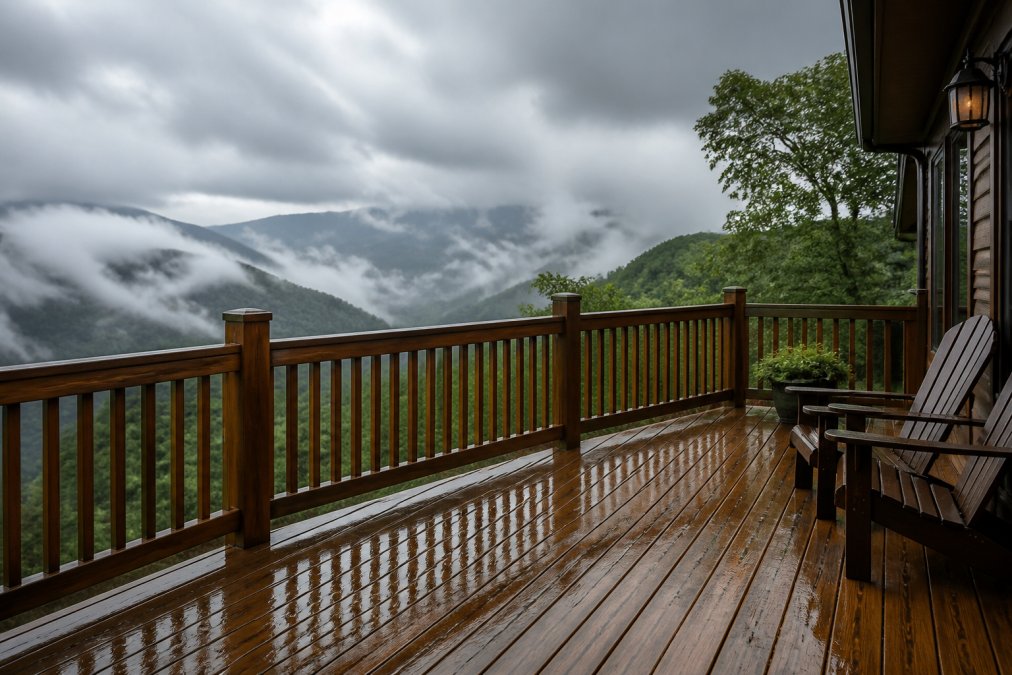
 how-to
Protecting Wood Decks From Mountain Weather
Last Updated: September 4, 2026
Mountain weather uniquely attacks exterior wood through freeze-thaw cycles, intense UV radiation, and rapid moisture swings. This guide from King's Choice Solutions covers the specific stresses and the preparation, staining, and maintenance steps to counter them.
Why Mountain Weather Damages Wood Decks Differently
The primary culprit is the freeze-thaw cycle: water seeps into the wood grain, freezes, expands, and creates microscopic cracks that allow more moisture in on the next thaw (fs.usda.gov). High altitude also means harsher UV rays, which bleach and degrade lignin faster, creating a gray, fuzzy surface that erodes moisture resistance (fpl.fs.usda.gov). Dense tree canopies create persistent humidity that accelerates fungal growth and rot.
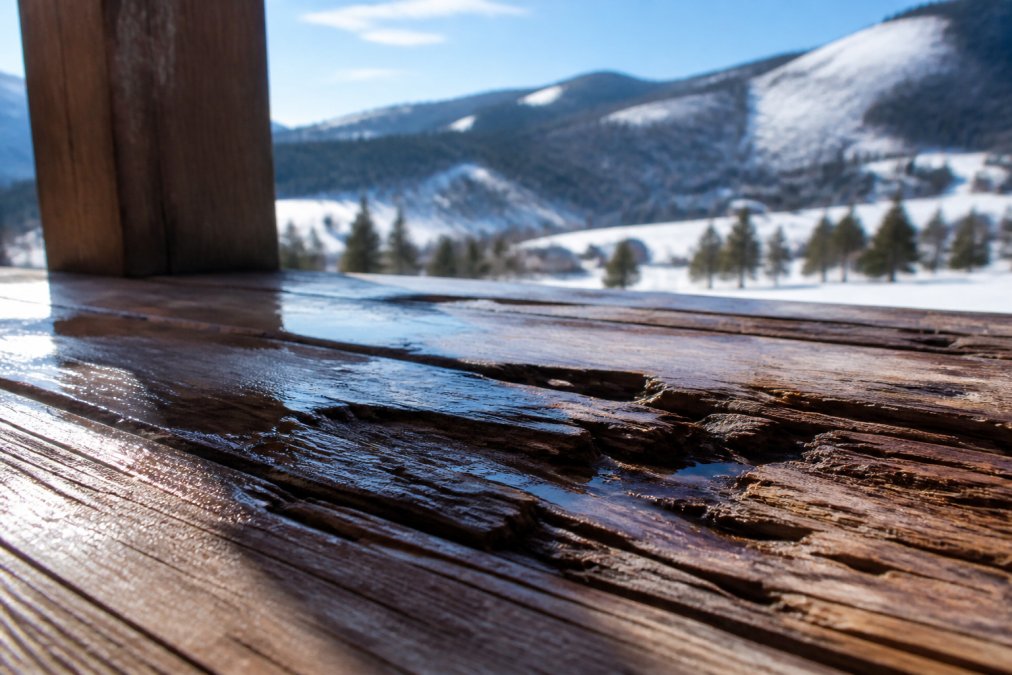
Snow load stresses joists and support beams, and pooled water can rot the ledger board connecting the deck to your home.
Best Deck Stain for Mountain Homes: What to Look For
The best deck stain for mountain homes is a high-quality penetrating oil-based stain. Penetrating oils soak into the grain, allowing the wood to breathe, while film-forming stains trap moisture and peel under freeze-thaw expansion. Look for a stain with high levels of UV blockers, a strong water repellent, breathability, and mildewcides. Solid stains block UV but peel and chip in freeze-thaw climates; semi-transparent penetrating stains offer UV and water protection with the flexibility to survive temperature extremes. Chemical compatibility matters: a penetrating oil won't adhere over a film-forming finish without aggressive stripping. Know your deck's finish history before buying stain.
Deck Sealing Frequency and Preparation Steps
A high-quality penetrating stain needs reapplication every two to three years in mountain environments (woodmagazine.com). The reliable indicator is a water test: if water soaks in immediately rather than beading up, it's time to reapply. Success depends almost entirely on preparation: deep clean with a deck brightener, sand to open pores, ensure the wood is completely dry, and backbrush the stain deep into the grain.
Applying too thick a coat leaves sticky residue; too thin leaves wood vulnerable. For off-site second-home owners, coordinating the multi-day process is challenging, which is why many hire a professional site management service.
| Maintenance Task | Recommended Frequency | Primary Benefit |
|---|---|---|
| Deep Cleaning & Brightening | Annually (Spring) | Removes mildew and prepares wood for sealing |
| Water Test & Inspection | Twice a Year | Identifies when the protective coat is failing |
| Reapply Penetrating Stain | Every 2-3 Years | Maintains moisture and UV protection |
| Snow Removal & Sweeping | As Needed (Winter) | Prevents moisture pooling and surface damage |
| Structural Inspection | Annually | Ensures joists, ledger, and supports are sound |
Winterizing is vital: move furniture off the deck, use a plastic shovel for snow, and avoid harsh chemical ice melts that degrade stain.
At King's Choice Solutions, we handle pressure washing, sealing, custom woodwork, and structural repairs for High Country climates. Call for a free estimate today.